


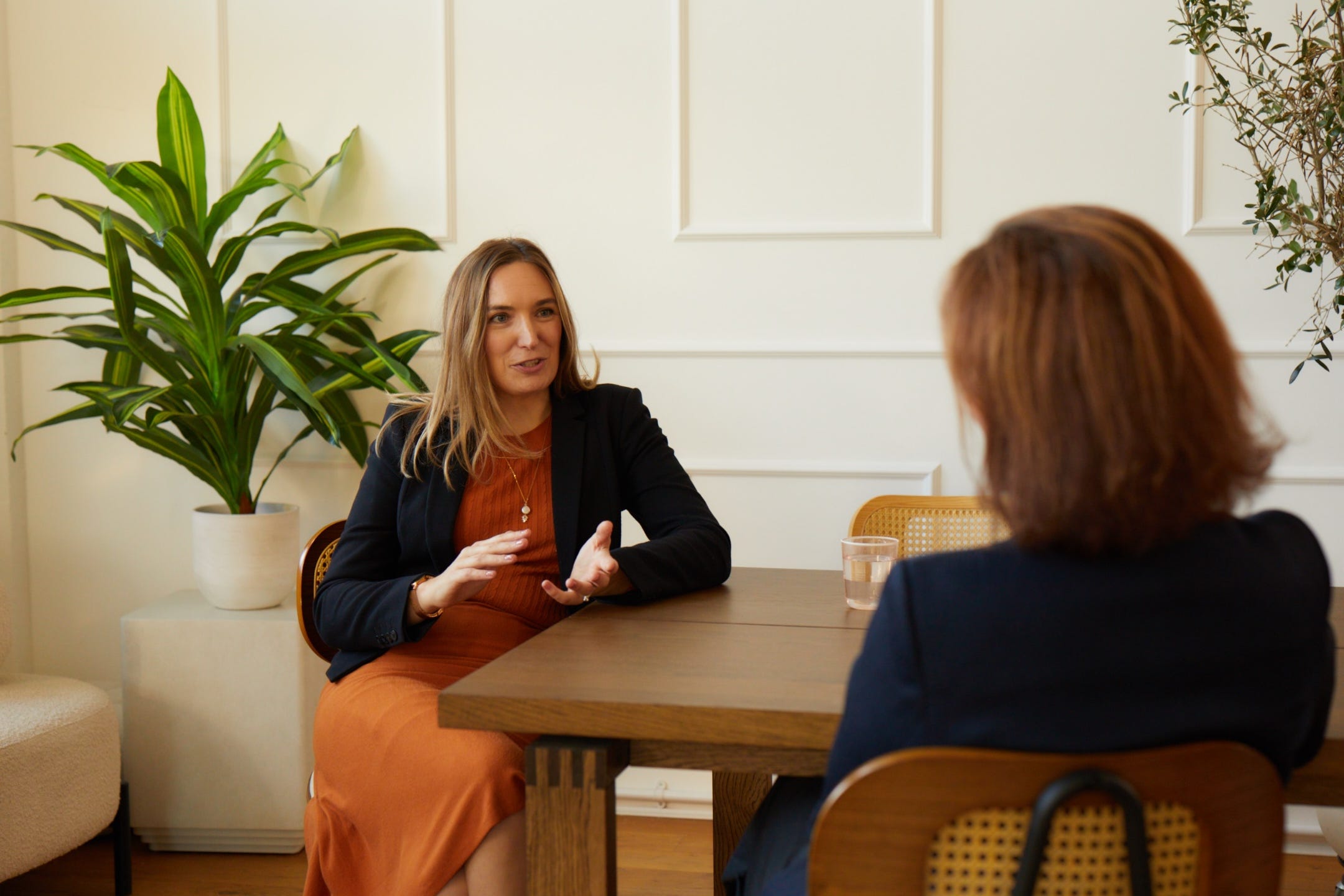
A dear friend of mine has recently been working with a coach as the organisation she heads up goes through a leadership transition. Curious, she asked me about my philosophy of coaching.
I hesitated, because for me the imposition of particular models and philosophies (that may or may not fit the client) onto the coaching relationship is something I think might be antithetical to all that we are setting out to do in coaching in the first place.
But this, of course, is also: a philosophy of coaching. Truthfully, my tendency to hedge between answers is more of a feature than a bug. And once you have a Substack archive as long as a novel, well; claiming to be agnostic is… a stretch.
So here, then, is what I believe about coaching, and how I practise accordingly.
(In other words, it’s a better answer than the one I gave her on the day.)
What I believe
The self is something we do.
Most of what we tend to treat as fixed in our lives was built, and can be unbuilt. Things like, habits of mind, ‘how we do things around here’, ‘the kind of person I am’ or ‘they are’. These are usually constructions. You can work within that, if you want, but you don’t have to. Sticking with the status quo is probably easier, but it’s not necessarily better.
I am wary of identity-led change. Taking on a new identity is a bit like putting on a costume. It can help you play a part, and sometimes that’s a useful bridging step to take. But it is still just… a part, and can end up becoming the next limiting envelope we’re subject to. Or worse: a delusion. If telling yourself “I’m a runner!” and planning your morning routine around “what a runner would do” supports your fitness goals, fair enough!
But if buying some really cute kit was the start, and also the end of the project… we have a problem. On the other side of the coin, I’ve met many folks who would desperately love to ‘become a writer.’ As far as I’m concerned, if you spend an hour before breakfast each morning writing out your next chapter, then you don’t need a book deal to make you one. You write, ergo, you’re a writer.
I think of the self less as a thing we have or are, and more as something we do.
I hold profiles lightly. The corollary of this, when it comes to coaching in the workplace, is that I treat personality profiling as a starting point, not a verdict. Personality tools can start a useful conversation, and if you have a profile you value, then yes, we can use it. But a type describes a pattern you have (or had), not who you are, or can be. I’m wary of anything that turns a habit into an identity, because what gets labelled also tends to get fixed in place. And despite the very best intentions and careful framing, this happens all too often in corporate contexts.
‘Believe in yourself!’ only goes so far.
Wishing does not make it so. We live in a world in which a few winners, or folks who present themselves as winners, can make a lot of noise about their recipe for success as if it has some sort of universal applicability, or as if others simply aren’t trying hard enough.
Many problems are structural, and real constraints to personal potential do exist. I also believe that many if not all of us carry limiting beliefs that constrain our own achievement either consciously or unconsciously, and that with support many of these can be overcome or rebuilt anew. But I’m highly suspicious of coaching philosophies that suggest that self-belief is the chief or only challenge.
Indeed, with a DEI lens, such a position is, I suggest, indefensible. To line up my opportunities, as an educated woman in a developed nation, with a supportive partner / co-parent, in good health, and with some spare cash in the bank, next to someone without such advantages, and suggest that it’s just a question of self-belief, stretches credulity to breaking point.
Some barriers need naming, not reframing, and many challenges that are experienced personally (for example, burnout), have roots not only in the individual but the system of which they are a part. To put all that on a single individual is an unbearable burden. I hope my clients agree that I won’t ever ask someone to carry blame for a system they didn’t build.
Not all suffering is avoidable, or meaningful. Sometimes we can’t even blame the system. Stuff just happens. There’s a tendency, though, especially in increasingly atheistic consumer societies, to over-emphasise the power and agency of the individual. Even to the extent, as Barbara Ehrenreich found after she was diagnosed with cancer, of suggesting that a positive attitude might cure her disease. Not all our suffering is of our own making, and it needn’t be meaningful, either.
Change is a fundamentally dynamic, energetic process.
So it makes sense to follow energy, not approval. Chasing another person’s idea of success is exhausting, and not much fun. Designing for joy is energising. And yet somewhere along the way, we forgot what it is we even like. The ability to delay gratification is supportive of long-term success in adult life, and it’s a critical skill for children to develop. In my experience, it’s not one my clients have an issue with. If anything, we need to dial up the volume on joy.
We discover ourselves in motion. Since the self isn’t something you ‘have’ or can find ‘out there’ or even ‘in here’, insight generally comes from stepping in, not away. Reflection is a thread that runs alongside and is interwoven with action, rather than replacing or preceding it in a neatly apportioned block of time.
Self-awareness, not self-consciousness, is the goal. Curiosity about yourself and your responses creates space for new options. That kind of genuinely open-hearted detachment can feel rather aimless, but is in fact paradoxically productive. Whereas scrutinising yourself in order to pass judgement (either good or bad) is immobilising.
Changing requires us to grapple with loss.
Progress, and winning, are rarely an unalloyed good. Winning comes at a price, which those of us who are wired for cooperation find hard to bear. You rarely get to hold your position and have the other side like it. Knowing, and accepting, that is part of acting with genuine, adult integrity. And likewise – for every step forward we take, there may be something left behind.
Our attachment to what worked really well in the past is chief amongst what holds us back. Grieving the change, not just celebrating it, is what so few of us make space for.
The ‘magic’ is in what passes between us.
The unconscious is always at work. Our earliest experiences made a deep and lasting impression on us, often before we had language and reason to interrogate our assumptions and interpretations of the world around us. Meaningful coaching will always touch on our origins.
Words should do real work. It’s very, very easy to trot out a glib soundbite, that captures nothing of what is raw and felt. It’s a competent performance, nothing more. I notice language that sounds meaningful but explains nothing, in coaching sessions, in businesses, and in the coaching industry itself. In the nicest way, I hope, my clients find that I will not let it pass.
The human relationship is irreplaceable. Tools, frameworks and even AI can support your thinking, although the risk is always that they provide a convenient way to avoid thinking, especially if that thinking is challenging and emotionally charged for us. (In other words: it’s the thinking we most need to do). The human soul longs to be witnessed, and a chat bot does not have a corresponding unconscious, or, care. A great many of us are lonely, and complete expression of ourselves is often difficult; even, and perhaps especially, with those who love us best. This seems to be getting harder, and may after all, be one reason I have a job.
Schools of Thought
It perhaps goes without saying, after the above, that I draw on multiple traditions and schools of thought. These are some that are closest to my work.
Person-centred Coaching. The centrality of the coach-coachee relationship; positive regard for the coachee; deep listening; respect for your pace, agency, and capacity to develop.
Relational Coaching. Recognising that the relationship is the key predictor of coaching success, and taking care over how that is established between coach and coachee.
Clean language & metaphor. Working inside your own imagery rather than importing mine, or other worn coinage.
Adult developmental lenses. Helping you to get a hold of the idea that once had hold of you; to observe the lens that shapes your thinking rather than inhabit it.
Critical and systemic coaching. Seeing the system around you, not just the person within it.
Psychotherapeutic perspectives. Recognising that our earliest models are formative, and shape much of how we are; bringing these into our consciousness creates opportunities to shift our way of being.
Approaches to which I am less aligned. At risk of grossly oversimplifying these approaches, from which I also draw; I tend not to run a fixed sequence such as GROW, or any such imposed plan for the work, or to use solution-focused approaches too mechanically. I’d rather not push towards closure before the real issue has surfaced. And I don’t believe attitude is everything. I’m sceptical of first-wave positive psychology’s emphasis on positive emotion; I’m closer in spirit to second-wave approaches that more directly address difficulty and ambivalence as valuable parts of the work.
A Provisional Conclusion
Articulating my beliefs on coaching is something I have resisted, chiefly because it’s difficult, and like most humans, I prefer not to do hard things before midday / a vat of caffeine.
But also (to give myself some credit) because, in accordance with my own philosophy: to set them out as I have just done risks ossification. Second, my general preference is to refuse false binaries: ‘this, but not that.’ Much of what is framed (in this piece, or in life more generally), as ‘either/or’ is really ‘and/both’. When something is true, it rarely means its opposite is absolutely and entirely false.
I very much hope my thoughts and beliefs continue to evolve and develop as I encounter the world through my coaching, through my research, through reflection, and through open-minded experimentation and trial.
So consider this, as ever, a working draft, from a self perpetually in progress.
I hope you’re having a fabulous week.
As ever, do drop me a reply. I so enjoy them!
Tamzin